
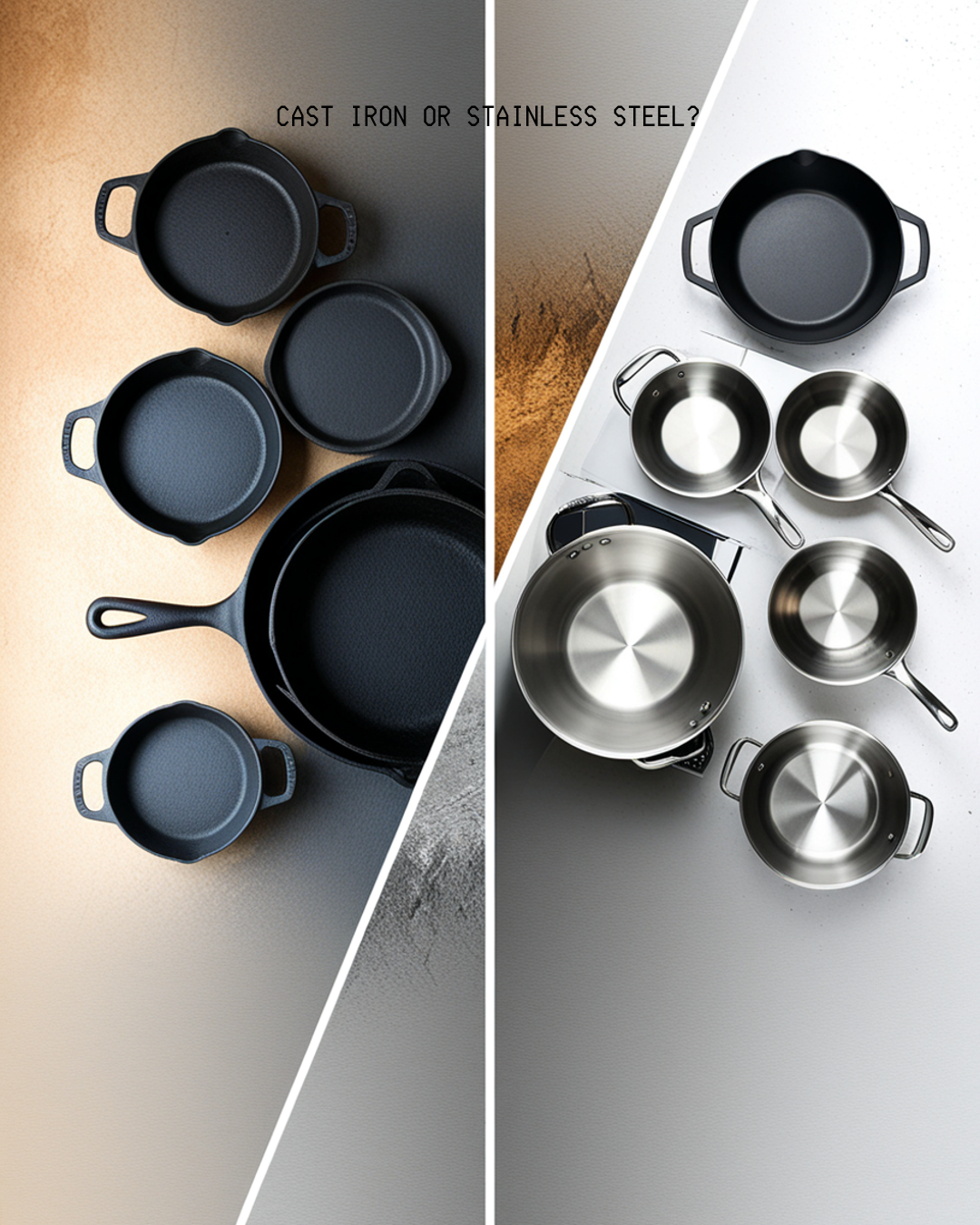
Walk into any kitchen store or scroll through any cookware website, and you'll eventually face the same question: cast iron or stainless steel? Both materials have passionate defenders, both have real strengths, and both have real limitations. The honest answer is that neither is universally better — the right choice depends on how you cook, what you cook, and how much maintenance you're willing to do.
Here's a complete breakdown of both materials so you can make the right call for your kitchen.
What Is Cast Iron Cookware?
Cast iron is one of the oldest cookware materials in existence. It's made by pouring molten iron into a mold, which creates a thick, heavy pan with exceptional heat retention. Most cast iron cookware comes in two forms:
Bare cast iron — the classic, raw surface that requires seasoning (a thin layer of baked-on oil) to become naturally non-stick and rust-resistant.
Enameled cast iron — cast iron coated with a porcelain enamel finish, which eliminates the need for seasoning and makes cleaning easier. Dutch ovens are the most common form.
What Is Stainless Steel Cookware?
Stainless steel cookware is made from an alloy of steel, chromium, and sometimes nickel. High-quality stainless steel pans are typically "clad," meaning they have a core of aluminum or copper sandwiched between layers of steel. This solves stainless steel's biggest weakness, which is uneven heat distribution.
Stainless steel is the dominant material in professional kitchens because it's durable, nonreactive, and compatible with all cooktop types, including induction.
Cast Iron: The Pros
Exceptional heat retention. Cast iron takes a while to heat up, but once it does, it holds that heat evenly and consistently. This makes it ideal for searing steaks, frying chicken, and baking cornbread — anything that requires intense, steady heat.
Oven-safe to very high temperatures. Most cast iron handles temperatures up to 500°F or higher, making it one of the most versatile stovetop-to-oven options available.
Naturally non-stick when seasoned. A well-seasoned cast iron pan develops a smooth, slick surface over time that rivals modern non-stick coatings — without the chemical concerns.
Lasts forever. A well-maintained cast-iron pan can genuinely last generations. Many cooks treasure skillets passed down from grandparents.
Inexpensive. Quality cast iron costs a fraction of premium stainless steel, and the performance-to-price ratio is hard to beat.
Cast Iron: The Cons
Heavy. A large cast-iron skillet can weigh 8–12 pounds. This isn't an issue on the stovetop, but lifting it to drain grease or transfer to the oven can be awkward.
Slow to heat. Cast iron takes 3–5 minutes to fully preheat, which isn't ideal when you need to cook something quickly.
Reactive with acidic foods. Bare cast iron reacts with tomatoes, citrus, and wine, which can leach iron into food and give it a metallic taste. Enameled cast iron solves this problem.
Requires maintenance. Bare cast iron must be dried immediately after washing to prevent rust, and re-seasoned periodically. It should never be soaked or put in the dishwasher.
Stainless Steel: The Pros
Extremely durable. Stainless steel is resistant to scratches, dents, and corrosion. It can handle metal utensils, dishwashers, and aggressive scrubbing without damage.
Non-reactive. Unlike bare cast iron, stainless steel won't react with acidic ingredients. You can simmer tomato sauce or deglaze with wine without any metallic aftertaste.
Easy to clean. Stainless steel is dishwasher safe and handles Bar Keepers Friend well for removing stuck-on food and discoloration.
Heats quickly. Especially in clad stainless pans, heat distribution is fast and responsive — great for tasks that require precise temperature control.
Works on all cooktops. Stainless steel is compatible with gas, electric, ceramic, and induction cooktops.
Stainless Steel: The Cons
Food sticks. Stainless steel is not naturally non-stick. Proper technique (preheating the pan, using enough fat, letting food release naturally) solves most sticking problems, but it takes practice.
Hot spots in lower-quality pans. Single-ply stainless steel heats unevenly. Always choose fully clad or multi-ply construction.
More expensive. High-quality clad stainless steel cookware costs significantly more than comparable cast iron.
Head-to-Head: Which Is Better For...
| Task | Winner |
|---|---|
| Searing steak | Cast Iron |
| Sautéing vegetables | Stainless Steel |
| Frying eggs | Cast Iron (seasoned) |
| Making pasta sauce | Stainless Steel |
| Baking cornbread | Cast Iron |
| Deglazing with wine | Stainless Steel |
| Braising meat | Cast Iron (Dutch Oven) |
| Boiling water | Stainless Steel |
| Camping or outdoor cooking | Cast Iron |
| Quick weeknight cooking | Stainless Steel |
The Honest Answer: You Probably Want Both
Most serious home cooks end up with at least one piece of cast iron and a set of stainless steel pans — because they complement each other rather than compete. A cast-iron skillet handles your searing, frying, and baking. A stainless steel sauté pan handles your sauces, vegetables, and everyday cooking.
If you can only start with one, here's the quick guide:
Choose cast iron if you love slow cooking, want something that will last forever, cook a lot of steaks or one-pan meals, or are on a tighter budget.
Choose stainless steel if you cook acidic dishes often, want quick-heating, responsive pans, prefer easy cleanup, or cook a wide variety of things that require different heat levels.
Shop Cookware at Nested Kitchen
Whether you're team cast iron, team stainless, or both, Nested Kitchen has you covered.
👉 Shop Cast Iron
👉 Shop Stainless Steel
NESTED KITCHEN
Cook.Serve.Gather.
