Essential Kitchen Tools vs Nice-to-Haves: What You Actually Need
Setting up a kitchen for the first time — or finally replacing years of mismatched hand-me-downs — can feel overwhelming fast. Cooking stores and gift guides make it easy to believe you need dozens of specialty gadgets before you can cook a proper meal. In reality, a fairly small set of core tools covers almost everything, with a handful of "nice-to-haves" you can add later once you know your cooking habits.
The Essentials: Buy These First
These are the tools that show up in nearly every recipe, regardless of what you're cooking:
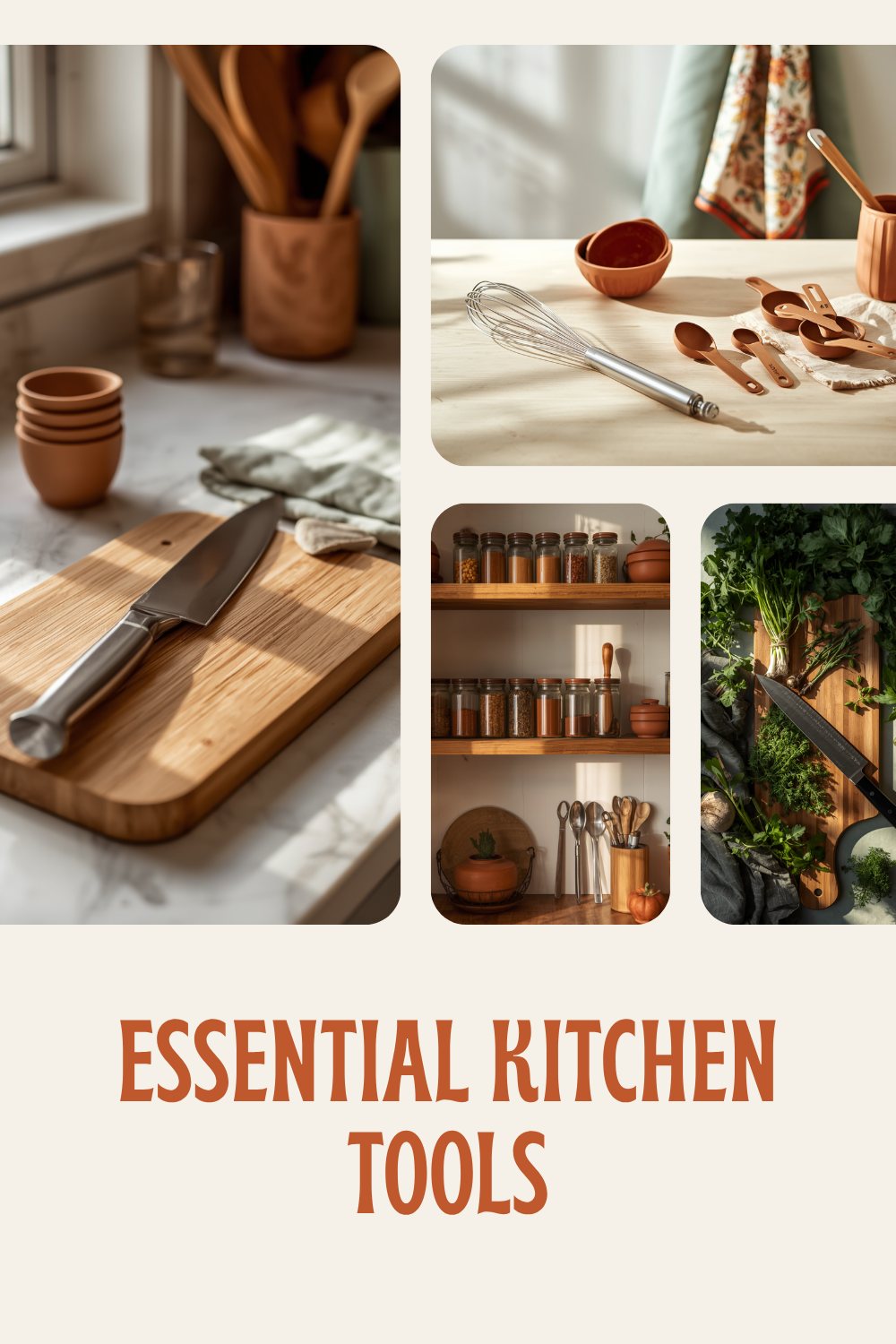
- A sharp chef's knife — the single most-used tool in any kitchen
- A cutting board — ideally one for produce and one for raw meat
- A large skillet — for sautéing, searing, and general stovetop cooking
- A medium saucepan — for sauces, grains, and reheating
- A stockpot — for pasta, soup, and large-batch cooking
- Mixing bowls — a nested set in a few sizes handles prep, mixing, and marinating
- Measuring cups and spoons — essential for both cooking and baking accuracy
- A wooden spoon and a spatula — cover the majority of stirring and flipping tasks
- Tongs — genuinely useful far more often than most people expect
- A colander — for draining pasta, rinsing produce, and washing grains
If you had to start from absolute zero, this list alone would let you cook the vast majority of everyday meals well.
The Nice-to-Haves: Add These as You Go
These tools are genuinely useful, but they matter more once you know your specific cooking habits:
- A Dutch oven — excellent for braising and slow-cooked dishes, but a real investment
- An immersion blender — convenient for soups, though a regular blender can substitute
- A stand mixer — worth it for frequent bakers, unnecessary for occasional cooks
- A mandoline slicer — great for consistent slicing, but not essential for basic prep
- A cast iron skillet — wonderful for searing and baking, but not a replacement for your everyday nonstick pan
- Specialty knives — a bread knife, paring knife, or boning knife, useful once your cooking gets more specific
- A kitchen scale — valuable for serious bakers, less critical for everyday cooking
How to Decide What to Buy Next
A simple rule of thumb: if you find yourself improvising a workaround for the same task more than a couple of times (using a mug to measure flour, or a fork to flip delicate fish), that's usually a sign it's time to invest in the right tool. Buying reactively, based on what you actually run into, tends to result in a far more useful kitchen than buying everything upfront.
Quality Over Quantity
It's almost always better to own fewer, higher-quality tools than a large collection of cheap ones. A single well-made chef's knife will outperform (and outlast) an entire cheap knife block, and the same logic applies across cookware, utensils, and bakeware.
Build Your Kitchen the Smart Way
Start with the essentials, cook for a while, and let your own habits guide what you add next. You'll end up with a kitchen full of tools you actually use, instead of ones gathering dust in a drawer.
Ready to build your starter kit? Browse our full Kitchen Utensils & Gadgets collection and Cookware collection to find the essentials for your kitchen.
