
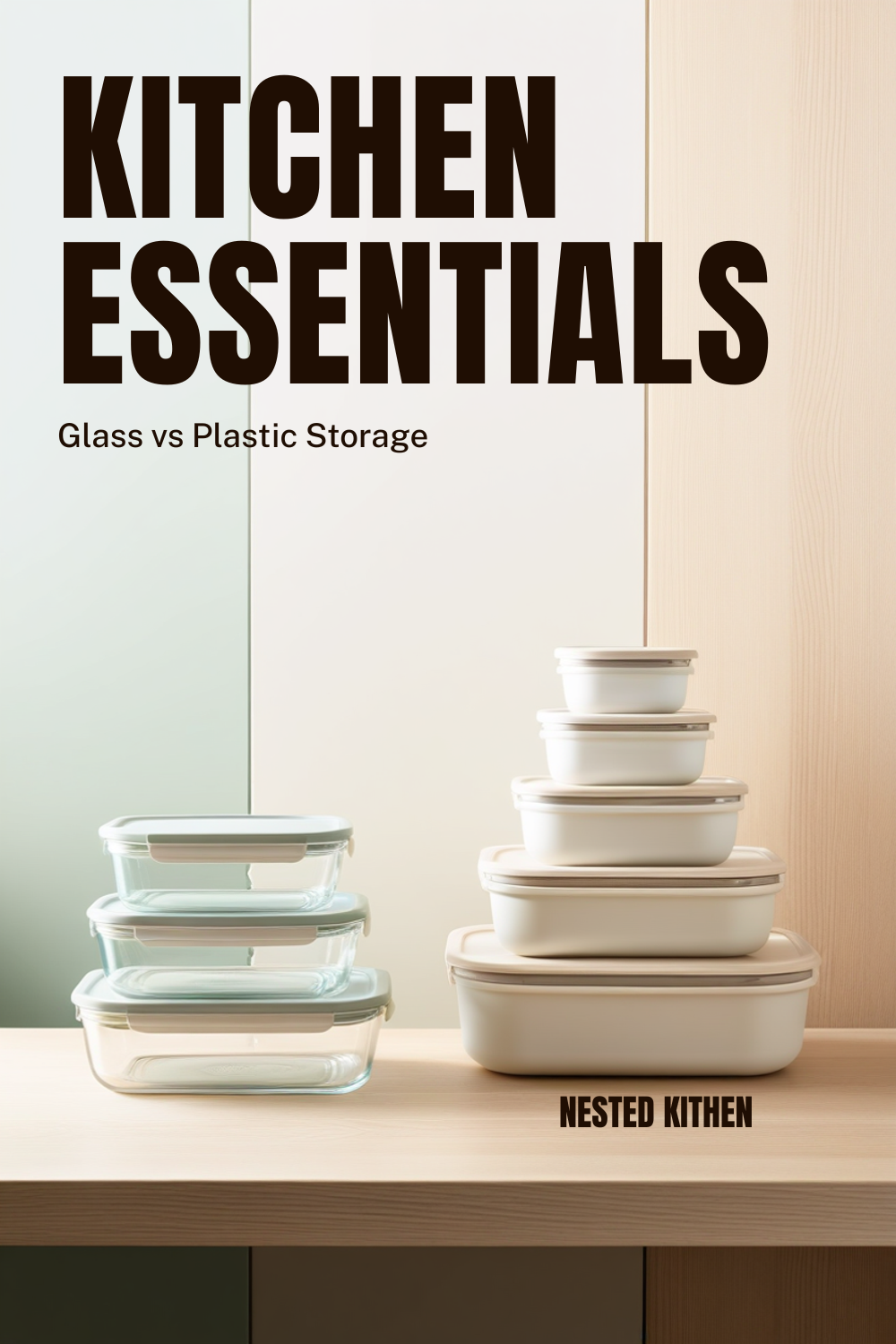
Glass vs Plastic Food Storage Containers: Which Is Better?
Open most kitchen cabinets and you'll find a mix of both — a few glass containers for leftovers, a stack of plastic ones for lunch on the go. But if you're building (or rebuilding) your food storage collection from scratch, it's worth understanding exactly how glass and plastic compare, so you can choose the right container for the right job instead of grabbing whatever's closest.
Quick Comparison
| Feature | Glass Containers | Plastic Containers |
|---|---|---|
| Durability | Very durable, but can chip or break if dropped | Lightweight and shatterproof |
| Staining/odor | Resists staining and odor absorption | Can stain and hold onto smells over time |
| Microwave safe | Yes, safely | Only if labeled microwave-safe |
| Oven safe | Often yes (check manufacturer guidance) | No |
| Weight | Heavier | Lightweight, easy to pack |
| Cost | Typically higher upfront | Usually more affordable |
| Longevity | Lasts for years without degrading | Can degrade, scratch, or warp over time |
The Case for Glass Storage Containers
Glass has become the go-to choice for anyone prioritizing durability and food safety. Because it's non-porous, glass won't absorb odors or stain from tomato sauce, curry, or berries the way plastic often does over time. It's also freezer, microwave, and (in most cases) oven safe, which means you can store, reheat, and even bake in the same container.
Best for:
- Reheating leftovers directly in the container
- Storing acidic or strongly flavored foods like tomato sauce or curry
- Long-term pantry or fridge storage where durability matters
- Anyone looking to reduce plastic use in the kitchen
Tradeoffs:
- Heavier, which matters if you're packing lunches or traveling
- Can chip or shatter if dropped on a hard floor
- Generally costs more upfront than a comparable plastic set
The Case for Plastic Storage Containers
Plastic containers remain a practical choice for everyday use, especially when weight and portability matter. They're far less likely to break if dropped, which makes them a natural fit for lunchboxes, backpacks, and picnic baskets. Quality, BPA-free plastic containers are also widely available at a lower price point than glass.
Best for:
- Packing lunches, snacks, or picnic food
- Households with kids where breakage is a real concern
- Budget-conscious storage needs
- Lightweight travel and camping
Tradeoffs:
- More prone to staining and holding onto odors over time
- Not oven-safe, and not all plastic is microwave-safe
- Tends to need replacing more often than glass
What to Look for When Buying Either Type
Regardless of material, a few features make any storage container more useful day to day:
- Airtight, leak-proof lids — essential for soups, sauces, and dressings
- Stackable, uniform shapes — saves significant cabinet space
- Freezer-safe rating — useful for batch cooking and meal prep
- BPA-free labeling — important if you're buying plastic
So, Which Should You Choose?
Most kitchens benefit from having both. Glass is the better choice for reheating, storing acidic foods, and long-term durability, while plastic is hard to beat for portability and budget-friendly everyday use. A practical starting point is a glass set for fridge and freezer storage, paired with a few lightweight plastic containers for lunches and on-the-go meals.
Ready to restock your kitchen? Shop our full Storage & Organization collection for glass and plastic containers built for everyday use and meal prep.
