
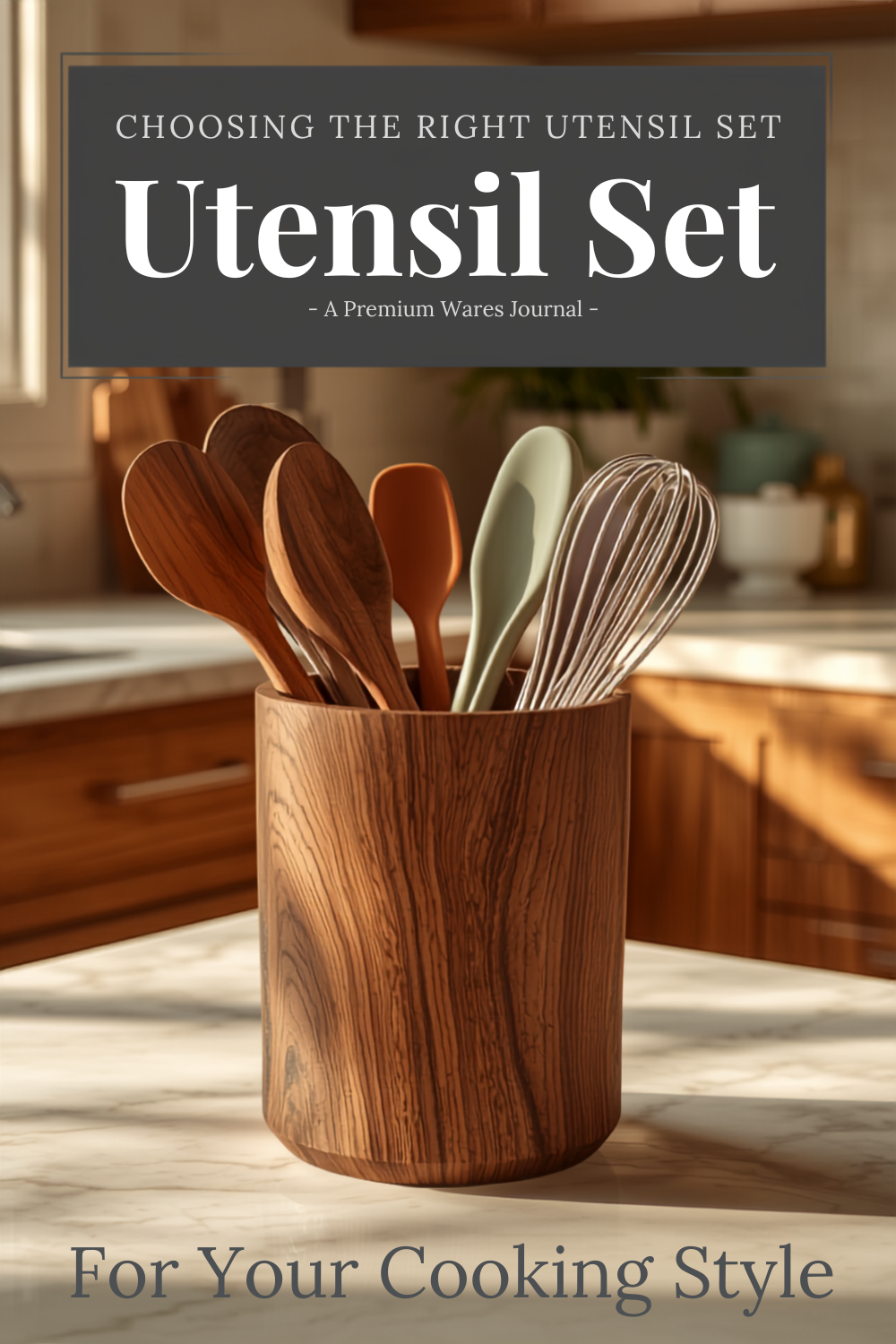
How to Choose the Right Kitchen Utensil Set for Your Cooking Style
Utensil sets can look nearly identical on the shelf, but the right one really depends on how you cook. A set built for quick weeknight meals looks different from one suited to serious baking or slow, low-heat braising. Before you buy, it helps to think through your actual cooking habits rather than just picking whatever set has the most pieces.
Start with How You Actually Cook
The everyday cook If most of your cooking is quick sautés, scrambled eggs, and simple weeknight dinners, prioritize a compact set with a spatula, slotted spoon, tongs, and a ladle. You don't need two dozen specialty tools — a tight, versatile set will get more daily use than a sprawling one.
The baker Bakers benefit from precision tools: a silicone spatula for scraping bowls clean, a whisk, and measuring spoons that are actually part of your "utensil" mindset even if sold separately. Heat resistance matters less here than flexibility and control.
The griller and high-heat cook If you frequently sear, fry, or grill, prioritize utensils with high heat tolerance and sturdy, long handles that keep your hands safely away from heat. Metal or heat-rated silicone tools are a better fit here than delicate wooden pieces.
The slow cooker and braiser For long, low-heat cooking, wooden spoons and sturdy ladles hold up well and won't degrade from hours of simmering.
Material Checklist
- Silicone: Best for high heat, nonstick cookware, and dishwasher-safe convenience.
- Wood: Best for thick batters, doughs, and gentle handling of cast iron or nonstick surfaces.
- Stainless steel: Best for durability and precision, though it can scratch nonstick coatings if you're not careful.
- Nylon: A budget-friendly, heat-resistant option, though it can wear out faster than silicone over time.
Features That Actually Matter
- Nonstick-safe tips — a must if any of your cookware has a nonstick or ceramic coating
- Comfortable, heat-resistant handles — matters most for anything used near an open flame or hot oil
- Hanging holes or a matching stand — keeps utensils accessible and off the counter
- Dishwasher-safe construction — a meaningful convenience for busy households
How Many Pieces Do You Actually Need?
More pieces isn't always better. A focused 5-7 piece set — spatula, slotted spoon, solid spoon, tongs, ladle, whisk, and a spoon rest — covers the vast majority of everyday cooking tasks. Specialty tools (a fish spatula, a pasta fork, a basting brush) are worth adding individually once you know you'll use them regularly, rather than buying a 20-piece set where half the tools sit untouched in a drawer.
Budget Considerations
A single well-made set from a consistent material and finish will typically outlast several cheaper, mismatched purchases. If budget is a concern, prioritize the 3-4 tools you use most (usually a spatula, tongs, and a stirring spoon) in higher quality, and fill in the rest gradually.
Building a Set That Actually Fits Your Kitchen
The best utensil set isn't the biggest one — it's the one that matches how you actually cook, protects your cookware, and holds up to daily use without needing to be replaced every year.
Ready to find your set? Browse our full Kitchen Utensils & Gadgets collection to build a utensil collection suited to your cooking style.
