
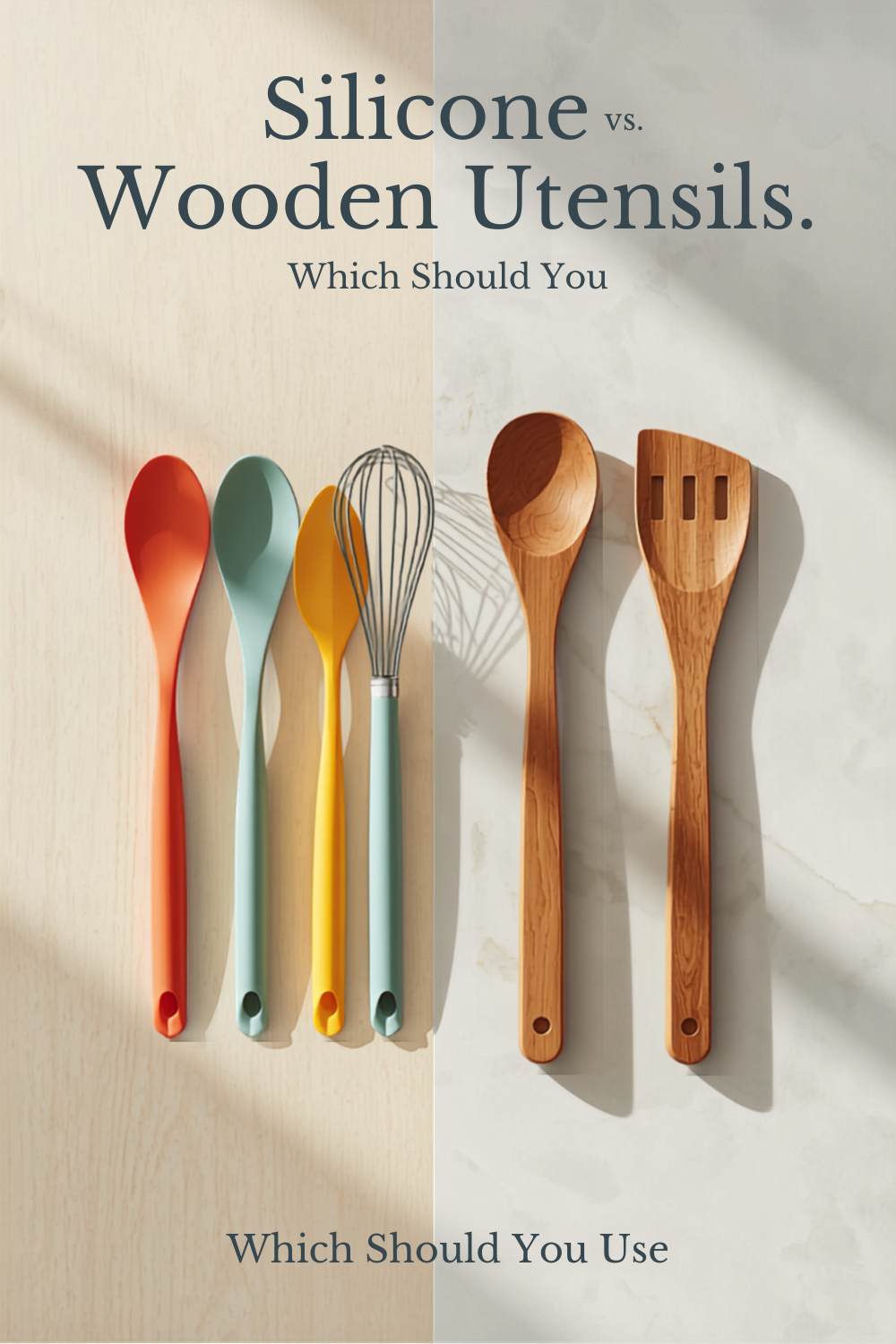
Silicone vs Wooden Utensils: Pros, Cons, and Best Uses
Open a utensil crock in most kitchens and you'll find a mix of silicone and wood — but few cooks stop to think about why. Both materials are safe for nonstick cookware and won't scratch delicate surfaces, yet they behave quite differently in terms of heat resistance, hygiene, and long-term durability. Here's how to decide which belongs in your hand for which task.
Quick Comparison
| Feature | Silicone Utensils | Wooden Utensils |
|---|---|---|
| Heat resistance | Very high, often 450-600°F | Moderate, can scorch at high heat |
| Nonstick-safe | Yes | Yes |
| Hygiene | Nonporous, easy to sanitize | Porous, needs regular oiling and care |
| Dishwasher safe | Usually yes | Generally hand wash only |
| Flexibility | Flexible, great for scraping bowls | Rigid, better for stirring and lifting |
| Aesthetic | Modern, colorful | Classic, warm look |
Silicone Utensils: Built for Heat and Hygiene
Silicone utensils have become a kitchen staple because they check nearly every practical box. They're heat resistant enough to sit in a simmering sauce without warping, safe for nonstick and ceramic cookware, and nonporous, meaning they don't absorb odors, oils, or bacteria the way wood can over time. Most silicone utensils are also dishwasher safe, which makes daily cleanup effortless.
Best for:
- High-heat cooking like sautéing and frying
- Scraping bowls clean thanks to their flexibility
- Anyone who prioritizes easy, dishwasher-safe cleanup
- Nonstick and ceramic-coated cookware
Tradeoffs:
- Can feel less sturdy than wood for heavy stirring or lifting
- Lower-quality silicone can retain smells if it's low-grade or overheated repeatedly
Wooden Utensils: Classic, Gentle, and Long-Lasting
Wooden utensils have been a kitchen staple for centuries, and they remain a favorite for good reason. They're gentle on cookware, naturally quiet against pots and pans, and sturdy enough to handle thick batters, doughs, and hearty stirring without flexing. With proper care, a good wooden spoon can last for years.
Best for:
- Stirring thick sauces, doughs, and batters
- Cooking with cast iron or other cookware where scratch resistance matters
- Cooks who prefer a classic look and feel
- Lower-heat cooking and general prep
Tradeoffs:
- Porous surface requires occasional oiling to prevent drying and cracking
- Not dishwasher safe — hand washing and thorough drying is a must
- Can absorb strong odors (like garlic or onion) over repeated use if not cared for properly
How to Care for Each
Silicone: Dishwasher safe in most cases, but check the manufacturer's heat rating before using it directly over an open flame or very high heat, since low-quality silicone can degrade.
Wood: Hand wash and dry immediately after use — never soak. Rub with food-safe mineral oil every few weeks to prevent cracking and keep the wood from drying out.
Which Should You Choose?
Most well-stocked kitchens use both. Reach for silicone when you're cooking at higher heat or want the ease of dishwasher cleanup, and reach for wood when you're stirring something thick or want the classic feel it brings to everyday cooking. A small set of each covers nearly every task you'll encounter at the stove.
Ready to round out your utensil collection? Browse our full Kitchen Utensils & Gadgets collection for silicone and wooden tools built for everyday cooking.
